Send a Whatsapp Message
 Free shipping on orders above £49
The best stethoscope for emergency medicine has to meet demands no other clinical environment places on an instrument. In addition, it must deliver acoustic performance in a busy resuscitation room while surviving constant use, frequent disinfection, and the physical demands of a high-volume department. Because I work as an Emergency Medicine Consultant at Erasmus MC Rotterdam and have used every stethoscope from basic ward instruments to premium cardiology models in this environment, this guide gives you an honest, experienced answer.
By Dr. Marcus Osei, MD — Emergency Medicine Consultant, Erasmus MC Rotterdam. Published every Saturday.
What Emergency Medicine Demands from a Stethoscope
First, acoustic sensitivity. As a result of working in a high-noise environment with genuinely sick patients, you need an instrument that can pick up what you need to hear even when the environment fights against you. Furthermore, durability matters — ED stethoscopes are used constantly, cleaned repeatedly, and subjected to the physical demands of a high-volume clinical environment. Therefore, an instrument that degrades quickly or loses acoustic quality is a liability in the ED. In addition, speed of use matters — any feature that slows you down during a time-critical assessment is a clinical problem. In short, the ideal stethoscope for emergency medicine is acoustically excellent, physically robust, and fast to use.
My Primary Recommendation: The Littmann Cardiology IV
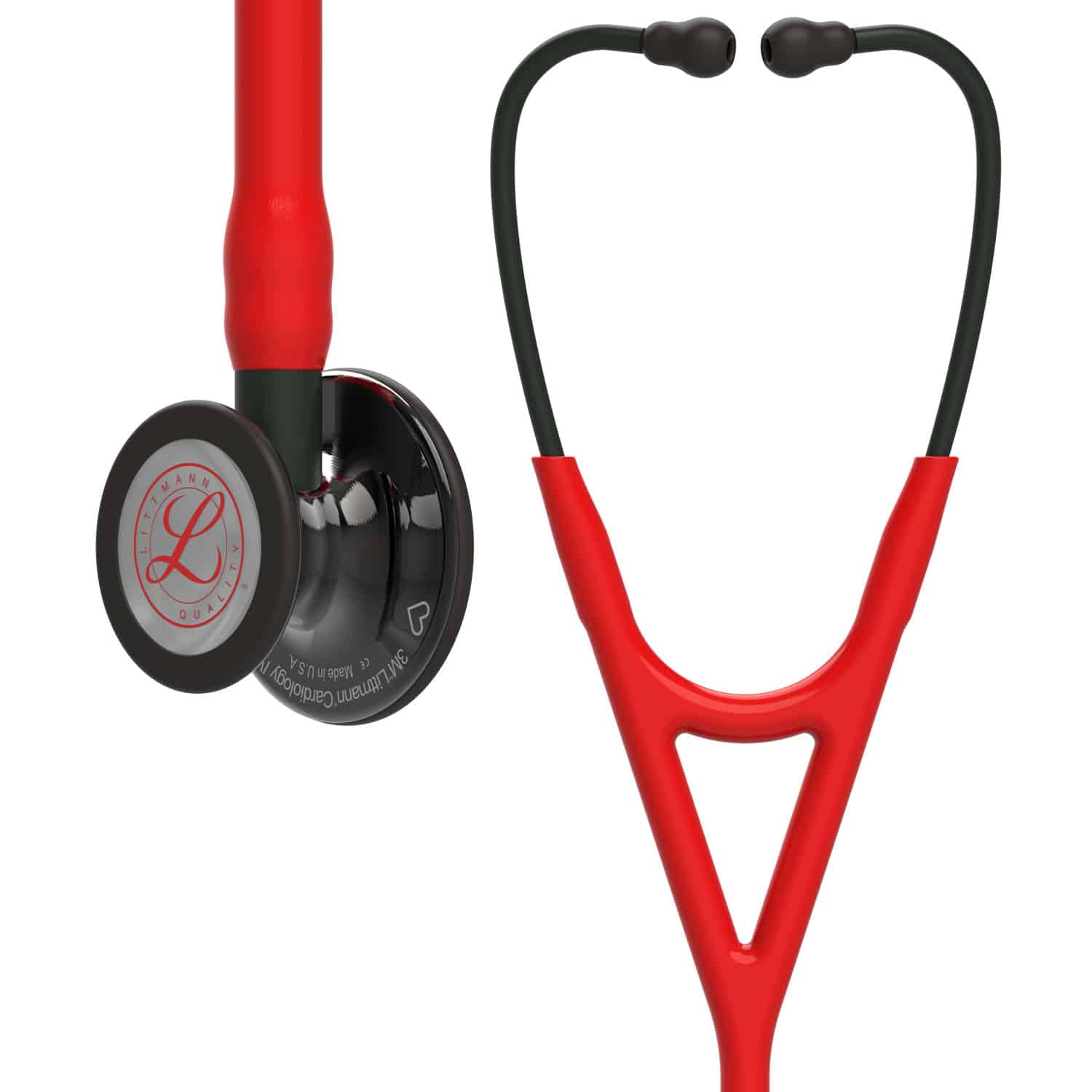
The Littmann Cardiology IV is my first-choice recommendation for emergency medicine consultants and registrars who work primarily in department environments. In addition, its acoustic performance — particularly high-frequency sensitivity — is clinically important for the kinds of sounds you need to detect rapidly in an ED. Because the Cardiology IV’s chestpiece is 40% larger than the Classic III’s, it delivers better acoustic coupling and a cleaner, more detailed sound image. Furthermore, its tunable diaphragm allows fast switching between high and low frequencies without removing the stethoscope from your ears. Therefore, for rapid, high-stakes auscultation — the kind that matters in an ED resus bay — the Cardiology IV is the mechanical stethoscope that delivers. Moreover, the 7-year warranty reflects the build quality you need from an instrument used this intensively. Browse all Cardiology IV models.
When to Choose the CORE Digital Instead
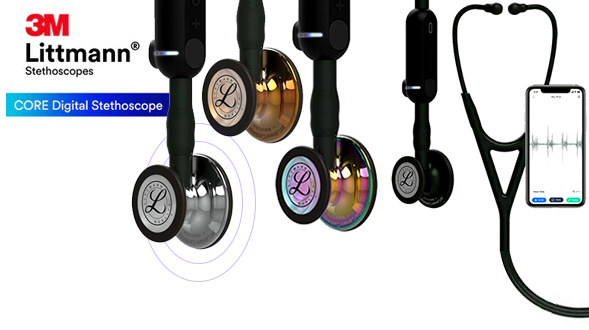
The Littmann CORE Digital is the instrument I reach for in the noisiest scenarios. In addition, its 40× amplification and active noise cancellation change what is clinically possible in a genuinely loud resuscitation room. Because I regularly assess patients in a resus bay where monitors, ventilators, infusion pumps and multiple clinical teams all generate noise simultaneously, having an instrument that cancels that noise and amplifies the clinical signal is a clinical necessity. Furthermore, the ability to record sounds and share them with cardiology colleagues has changed how I manage suspected cardiac presentations. Therefore, for ED consultants who work in high-volume, high-noise departments, the CORE Digital deserves serious consideration alongside the Cardiology IV. For example, in a patient with suspected aortic dissection at 2am, being able to record a clear aortic regurgitation murmur and share it with the on-call cardiothoracic team in seconds is genuinely valuable.
Auscultation Under Pressure — The ED Technique Difference
Emergency auscultation is different from ward auscultation. First, you are rarely in a quiet room with an alert, cooperative patient. As a result, your technique needs to be faster, more systematic and more decisive. Furthermore, you often need to make rapid binary decisions — is there a pneumothorax or not? Is there pulmonary oedema? — rather than characterising subtle murmur features. Therefore, the most important auscultation skill in emergency medicine is not sensitivity to subtle sounds but efficiency in answering the immediate clinical question. In addition, knowing exactly what you are listening for before you put the stethoscope on the chest makes every auscultation faster and more useful.
Durability in the ED: What to Expect
The ED environment is hard on equipment. In addition, stethoscopes are particularly vulnerable to the frequency of alcohol wipe-downs required in infection control protocols. Because both the Cardiology IV and CORE Digital use Littmann’s next-generation tubing material, they resist staining, cracking and degradation from repeated alcohol exposure significantly better than cheaper alternatives. Furthermore, the Cardiology IV’s stainless steel chestpiece is essentially indestructible under normal clinical use. Therefore, both instruments represent sound long-term value in the ED environment, even at their higher initial cost. In short, a cheap stethoscope that needs replacing every two years is not cheaper than a quality instrument that lasts ten.
Frequently Asked Questions
What stethoscope do emergency medicine consultants use?
The Littmann Cardiology IV is the most common choice among ED consultants at Erasmus MC. For clinicians who regularly work in high-noise environments, the CORE Digital is increasingly the preferred instrument.
Is the Classic III good enough for emergency medicine?
The Classic III is used by many ED nurses and junior emergency doctors and handles the majority of ED auscultation well. For consultants and registrars doing rapid, high-stakes cardiac and respiratory assessment under noisy conditions, however, the Cardiology IV’s superior sensitivity gives a meaningful clinical advantage.
How do you auscultate in a noisy resus room?
The most effective approaches: ask for noise reduction where possible, use patient positioning to your advantage, press firmly with the diaphragm to improve acoustic coupling, and consider the CORE Digital for its active noise cancellation. Furthermore, knowing exactly what you are listening for before applying the stethoscope reduces the time you need to hold position in a noisy environment.
Browse all Littmann stethoscopes at Stethoscope24 | Learn more at Littmann.com
About the author: Dr. Marcus Osei is a Consultant in Emergency Medicine at Erasmus MC Rotterdam with 12 years of high-acuity experience. He publishes every Saturday at 8:00 AM CET.