Send a Whatsapp Message
 Free shipping on orders above £49
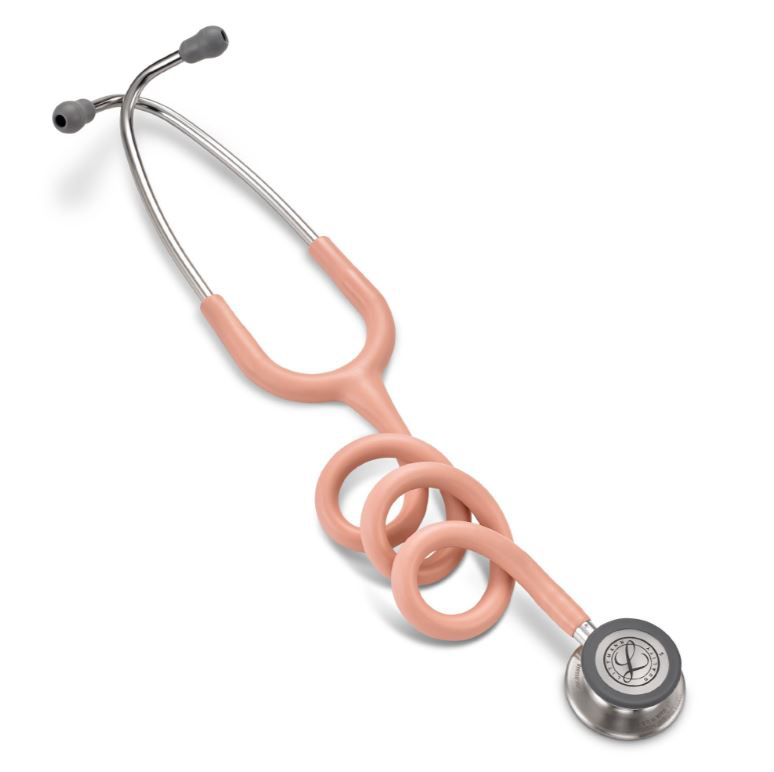
Choosing the right stethoscope for paediatrics and PICU is one of the most clinically consequential equipment decisions a paediatric clinician makes. In addition, the acoustic challenges of paediatric auscultation are substantially greater than in adult medicine — smaller patients, faster heart rates, narrower acoustic windows, and patients who cannot tell you what is wrong. Because I have spent 15 years as a Paediatric Intensivist at the Karolinska University Hospital Stockholm and hold an MD PhD in paediatric respiratory physiology, this guide covers everything you need to know about matching the right instrument to the right patient.
By Dr. Ingrid Larsson, MD PhD — Paediatric Intensivist, Karolinska University Hospital Stockholm. Published every Sunday.
Why Paediatric Auscultation Is Acoustically Different
First, consider the scale difference. As a result, a premature infant’s chest may be only 8–10 cm across, compared to 30–35 cm for an adult — the acoustic geometry is entirely different. Furthermore, a neonatal heart beating at 120–160 beats per minute produces sound patterns that require specifically trained clinical interpretation. Therefore, an instrument that works well for adult auscultation may not give you adequate detail for neonatal assessment. In addition, children are frequently uncooperative, moving and crying during examination, which requires the clinician to work quickly with an instrument that maximises available acoustic information. Moreover, the clinical consequences of missing a significant paediatric finding — a critical congenital heart defect murmur in a neonate, a tension pneumothorax in a PICU patient — are severe. In short, paediatric auscultation demands the best possible instrument used with the best possible technique.
The Littmann Classic II Infant — For Neonates and Premature Infants
The Littmann Classic II Infant is the correct instrument for neonatal assessment. In addition, its chestpiece is sized specifically for neonatal patients, which is critical for achieving adequate acoustic coupling with the small neonatal chest. Because the acoustic seal between the chestpiece and the chest wall determines sound quality, using a standard adult or paediatric chestpiece on a premature infant gives you meaningfully worse acoustic information. Furthermore, the non-chill rim and diaphragm maintain patient comfort, which matters enormously for minimising artefactual movement in neonatal examination. Therefore, any clinician working in NICU — neonatal nurses, neonatologists, neonatal transport teams — should use the Classic II Infant rather than adapting a standard instrument. In short, this is not a preference — it is the right clinical tool for the right patient.
The Littmann Classic II Pediatric — For Children and Toddlers
The Littmann Classic II Pediatric is designed for paediatric patients beyond the neonatal period — infants, toddlers and younger children. In addition, its chestpiece is smaller than a standard adult instrument, providing better acoustic coupling for the narrower chest walls of young children. Because paediatric heart sounds are often higher-pitched and faster than adult sounds, the Classic II Pediatric’s acoustic characteristics are optimised for this frequency range. Furthermore, the non-chill features make examination less distressing for anxious young patients. Therefore, paediatric nurses, paediatric A&E teams and GPs seeing children should prioritise this model for paediatric assessment. Available in four colour options with a 3-year warranty.
Can I Use a Classic III for Paediatric Assessment?
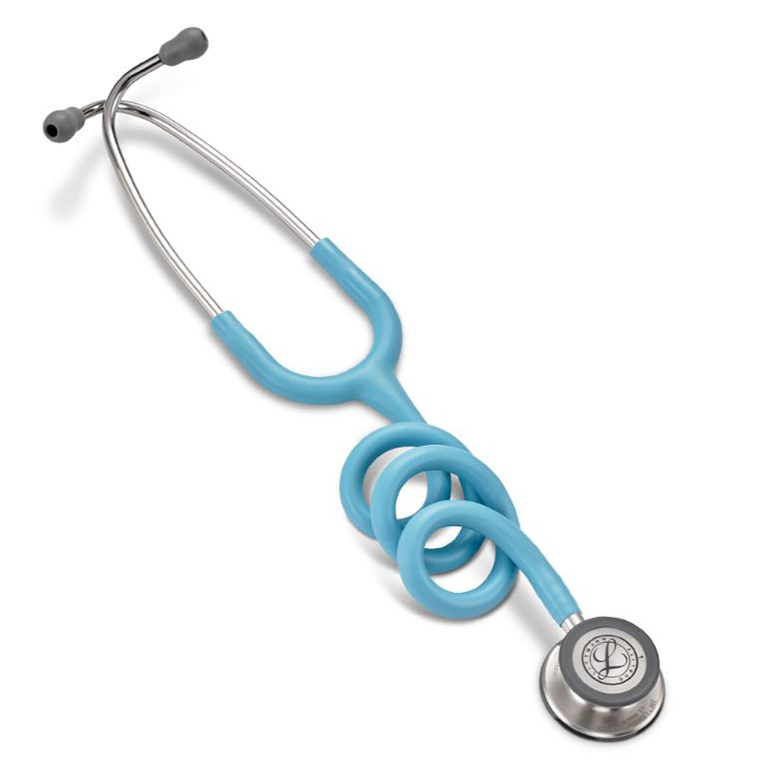
Yes — and many clinicians do. In addition, the dual-sided Classic III includes a paediatric side on the smaller bell, which gives adequate acoustic coupling for children of school age and above. Because older children and adolescents have chest wall dimensions approaching adult size, the Classic III performs well for this age group. Furthermore, for clinicians who see a mix of adult and paediatric patients — GPs, general medicine, paediatric A&E with an older age range — the Classic III’s dual-sided design offers practical versatility. Therefore, the Classic III is a reasonable choice if your paediatric work is primarily with older children and you also see adults. However, for dedicated paediatric clinicians — paediatric nurses, PICU doctors, neonatologists — the purpose-built Classic II Pediatric or Classic II Infant is the correct instrument.
Congenital Heart Disease — What the Stethoscope Tells You
Congenital heart disease is one of the most important reasons to use the right stethoscope for paediatric assessment. First, critical congenital heart defects — including ventricular septal defects, atrial septal defects and patent ductus arteriosus — produce characteristic murmurs that are detectable on auscultation with the correct instrument and the clinical knowledge to interpret them. As a result, the first clinical encounter leading to diagnosis of a significant congenital defect is often a routine auscultation with a paediatric stethoscope. Furthermore, the acoustic characteristics of congenital murmurs — timing, location, radiation and quality — require careful, systematic assessment. Therefore, developing both the right instrument and the right technique for paediatric cardiac auscultation is one of the most clinically important investments any paediatric clinician can make.
Frequently Asked Questions
What is the best stethoscope for PICU nurses?
For PICU nurses working with a mixed paediatric age range, the Littmann Classic II Pediatric is the primary recommendation. Because it is optimised for the acoustic characteristics of paediatric patients, it gives better clinical information than an adult instrument. For neonatal nurses in NICU, the Classic II Infant is the correct choice.
Can I hear a neonatal murmur with a Classic III?
You may detect a significant neonatal murmur with a Classic III, but you will hear it with less clarity than with the Classic II Infant’s purpose-built neonatal chestpiece. Furthermore, subtle murmurs indicating significant pathology may be missed entirely with an adult instrument on a very small neonatal chest. Therefore, using the correct instrument — the Classic II Infant — is clinically important, not just best practice.
What do paediatric nurses use in PICU?
At the Karolinska PICU, the majority of nursing staff use the Littmann Classic II Pediatric for their primary paediatric assessments, with Classic II Infant instruments available specifically for neonatal patients. Because standardising on the correct instrument reduces clinical errors, this is the approach I recommend for all paediatric clinical teams.
Browse Littmann Classic II Pediatric and Infant at Stethoscope24 | Learn more at Littmann.com
About the author: Dr. Ingrid Larsson is a Paediatric Intensivist at the Karolinska University Hospital Stockholm with an MD PhD in paediatric respiratory physiology and 15 years of neonatal and paediatric critical care experience. She publishes every Sunday at 8:00 AM CET.